Condition
Pain after previous treatment
Injections, physiotherapy or surgery that did not settle the problem. Usually this means the pattern was read wrong, not that nothing works.
This page explains the condition. It does not recommend a treatment, because that depends on your joint rather than your diagnosis label.

In plain English
Why a treatment does not work
A treatment that did not help is information, not a dead end. It usually points at one of a small number of things.
The commonest is a mismatch: the treatment was aimed at a different problem from the one you actually have. A lubricating injection will not do much for a mechanical block. A surface treatment will not hold up in an unstable joint. Something targeting inflammation will not help a joint that is not inflamed.
Sometimes it is timing, where a treatment suited to earlier wear was given to a joint that had moved past it. Sometimes the treatment was right but expectations were not set properly, and a result that was actually reasonable felt like a failure. And sometimes surgery elsewhere in the joint changed the mechanics: removing a meniscus, for example, concentrates load onto cartilage never designed for it.
Common symptoms
What people usually describe
You will not have all of these, and having them does not confirm the diagnosis.
No change at all
The treatment did nothing, which often means it was aimed at the wrong mechanism.
Brief relief only
It helped for a few weeks then faded, which tells you something worked but not for long enough.
Worse afterwards
A flare that never settled needs looking at properly before anything else is added.
Different pain now
The character or location of the pain has changed since the treatment.
New mechanical symptoms
Catching, locking or giving way that was not there before is a significant change.
Pain after surgery
Joint pain years after an operation, particularly a meniscectomy, is a recognised pattern.
Or is it something else
How this differs from similar problems
A treatment never properly tried
Conservative care means around three to six months of consistent physiotherapy, exercise, weight management and regular pain relief. A fortnight of exercises is not a failed trial.
Expectations that were never set
Some treatments take six to twelve weeks to show anything. Judging them at two weeks is judging them too early.
A different problem entirely
Pain that has moved or changed character may be a new issue rather than a failure of the old treatment.
Imaging
What we look at
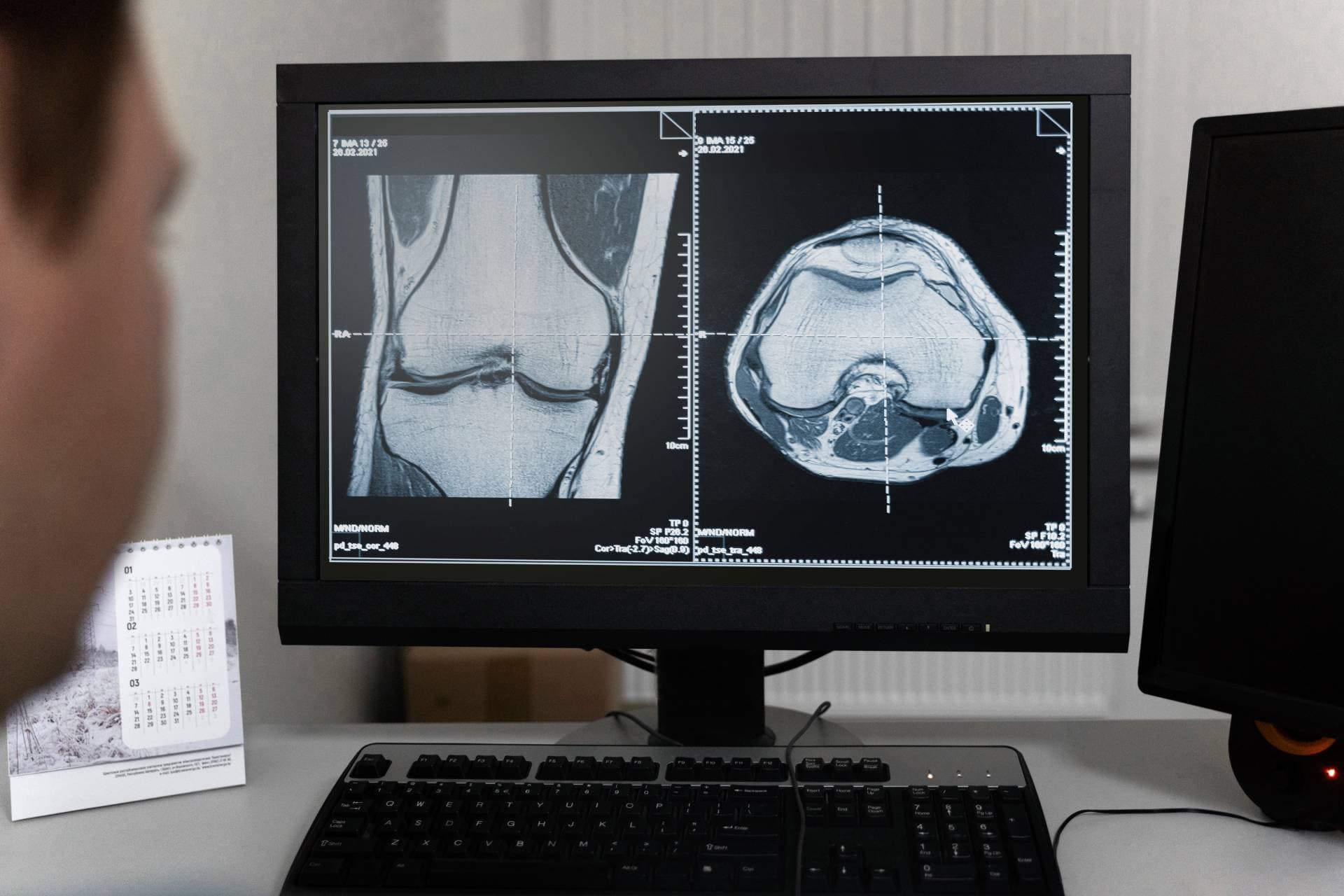
Current imaging matters more here than almost anywhere else. If your last scan predates the treatment that failed, it cannot tell us what the joint looks like now.
We look for the things that explain a poor response: mechanical problems that no injection addresses, wear that has progressed past the treatment given, bone marrow lesions causing pain out of proportion to the cartilage damage, and inflammation that was never the target.
Bring what you have, including old scans and any record of what was injected and when. The history of what was tried and how the joint responded is genuinely useful diagnostic information.

What may be discussed
Treatments that tend to come up
Not a recommendation. These are the options a doctor may raise for this condition, and which one fits is decided on examination and imaging.
Possibly none of them
An assessment first
Start here. When something has already failed, the priority is understanding why, not adding another treatment on top.
Book an assessmentRebuilds
ChondroFiller Injection®
Where a symptomatic treatment was given but the surface itself is the problem.
Cushions
Arthrosamid®
Where lubrication was tried and faded, and the joint needs cushioning and a calmer lining instead.
Regenerates
Mytocel MSK
Where wear is still early and a biological approach has not yet been tried.
Limits
When an injection is not enough
We offer four injections and nothing else. These are the situations where the honest answer sits outside them.
- Two or more well-chosen injections have given no response at all
- Mechanical symptoms have appeared that were not there before
- The joint has progressed to the point where a replacement would do more
- The pain is not coming from the joint we have been treating
Urgent
When to seek help sooner
These are not injection-clinic problems. If any apply, contact your GP, NHS 111 or an emergency department rather than booking with us.
- A hot, swollen, severely painful joint after an injection, which needs urgent assessment
- Fever following any injection or procedure
- Sudden loss of movement in the joint
- Severe pain that is worsening rather than settling after a procedure
Questions
Common questions
- Is it worth trying again if one injection did not work?
- It depends entirely on why it did not work. Repeating the same treatment for the same reason is not usually the answer. Choosing a different one because the pattern was misread often is.
- How long should a treatment have been given?
- It varies. Hyaluronic acid takes a few weeks. A scaffold approach builds over six to twelve months. Conservative care needs three to six consistent months before it counts as tried.
- My knee started hurting years after meniscus surgery.
- That is a recognised pattern. The meniscus spreads a large share of the load across the knee, and once it is removed that force concentrates onto cartilage that was not built for it.
- Will you just sell me another injection?
- No. If the honest answer is that none of our four treatments fits, you will be told that. We would rather lose the booking than add a fifth thing that does not work.
Related
Find out what your joint actually needs.
An assessment looks at the joint, your imaging and what you want back, then tells you which of the four fits, or whether none of them does.